Friday, August 31, 2012

Sunday, August 26, 2012

Morning Glory Flower Photos

Morning glory flowers are flowers that unravel into full bloom in early morning. In the day time, they curl in. Here are some photos I got of them:


Do you like to garden?

Friday, August 24, 2012

New Year's Goals

I set some Etsy goals for 2012 at the beginning of this year. You can see that entry here. These are the goals and how I am doing sofar:

*I said I wanted to redo a lot of my item photos because a lot of my item photos were outdated. I took a bunch of photos earlier this year with my new camera and I'm in the process of editing all the photos in my Etsy shop. I think it makes my item listings look a lot nicer. It's also fun to change things up.


*I wanted to experiment with techniques such as making my own paper. I haven't created a lot of new items this year, but I did find a store that has eco friendly paper I want to try out.

*I wanted to do at least one giveaway in 2012. I'm planning for this. Let me know what you think I should giveaway in the comments.


*One of my other goals was to find ways to promote my shop. I haven't done a lot of advertising because I don't have a lot of extra money to spend right now. I am planning to advertise on blogs and have a list of blogs I want to try my ads on. I'm also thinking of trying Project Wonderful again. My ads are kind of outdated so I'm going to redo them and also make some specifically for this blog. I did try Etsy search ads to see if they were effective and I didn't really find them effective for me.


*I set a goal to have more consistent sales. I don't have a lot of control over this, but my sales are still inconsistent. I might want to find new ways to promote my shop to try to build my audience.

*I said I wanted to do craft shows in 2012. I did one earlier this year. You can read about my experience here. If you have any suggestions for craft shows in Chicago, let me know!

*I used to sell a couple of my items in local shops. I might want to start doing that again. I haven't been actively looking for shops, but it's something I might do and try to see if I can get my items out there.


*My last goal was to keep blogging consistently and promoting this blog. I've been doing this successfuly. I keep a schedule for my blog entries and that has helped me blog consistently. I also post my blog link on a couple blogging Etsy teams every time I post a new entry and that has helped me promote this blog.

Do you set goals?

Thursday, August 23, 2012

Inspiration: Gabrielle Bernstein

Gabrielle Bernstein is an author, motivational speaker and spiritual guru. She founded HerFuture wrote the books "Spirit Junkie" and "Add More -ing to Your Life". I haven't read any of her books, but I found her YouTube channel and I think her videos are inspiring and she has a lot of good advice/ wisdom.  Here's a couple:


What inspires you?

Saturday, August 18, 2012

Friday, August 17, 2012

750 Words Writing Website

I found this really interesting website called 750Words. It's basically an online journaling website that's private. When you write, it's just basic text so it's focused just on writing. You're supposed to write at least 750 words every day. I've been doing it for a few months and even though I haven't written 750 words every day, it's helps me write more. 

One feature I thought was unique was you can see visual charts and statistics for each day's writing. Here are some of mine: 


Do you like to write?

Thursday, August 16, 2012

Artwork Inspiration

I love looking at other people's artwork to get inspired. These are some things that have inspired me from the I.♥.Art blog:


 What inspires you?

Blue and Gold Marbled Journals

Both these journals use blue and gold marbled paper. The first journal's paper is from Venice, Italy. I got it while I was traveling to Italy. The second journal's decorative paper is from Thailand.

Blue and Gold Marbled Coptic Stitch Journal

Let me know what you think in the comments.

Saturday, August 11, 2012

Desserts I Want to Try

These are some dessert recipes I want to try:


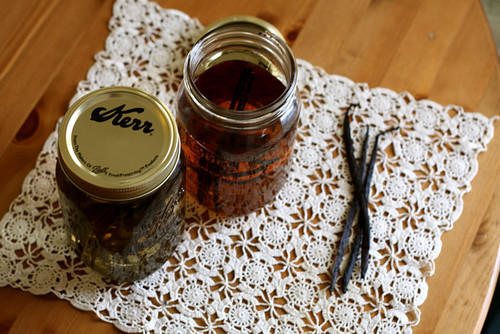
I've always wanted to try to make my vanilla extract. I think it will make recipes you make taste better if you use homemade vanilla.


I'm a vegan and these vegan thin mints look really good. Chloe, who wrote the recipe, won an episode of Cupcake Was.


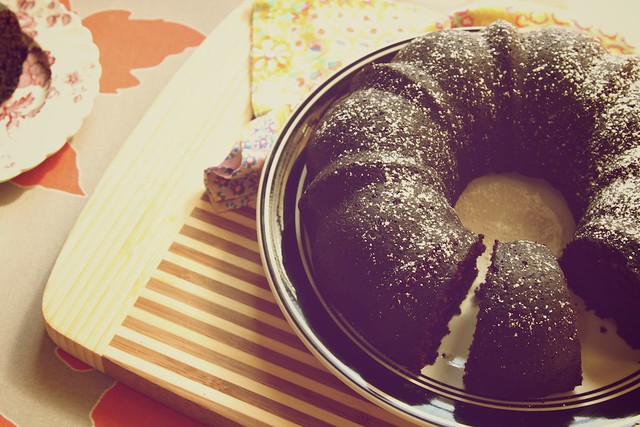
I love reading Joy the Baker's blog, but I haven't tried a lot of her recipes. This chocolate cake would be fun to make. W

Have you made any good dessert recipes lately?

Thursday, August 9, 2012

Basic Bookbinding Tutorial Part 3: Making the Cover and Putting it Together

This is the third part of my bookbinding tutorial. If you missed parts one and two, click here and here. In this part, I'm going to show how to make the cover of the journal and put the whole book together.

Cutting the Boards

To make the cover, you’ll need binder’s board. If you don't have binder's board, you can use cardboard (it's good to use cardboard if you're just practicing or starting out). You want the covers to be a little bigger than the text block you made. I usually make my covers ½-1 inch bigger on all sides. Measure the board and cut it with a paper cutter or an exacto knife. You’ll also need to cut a spine for the cover. You want the spine to be the same height as the covers, but a much smaller width. To know what width to do, sandwich the text block between the board covers, squeeze tightly and measure the width of the spine.

You should have three pieces of board now. Make sure the two covers are the same size. Since the edges of the board might be kind of rough from cutting them, I like to use sand paper to sand the edges.

Making the Cover
Choose the decorative paper or fabric you want as the cover. In my example, I used decorative paper of Paris. Put a couple sheets of wax paper on the area you're working in and position the boards over the paper or fabric so there is about 1/2 inch between them. Cut the paper or fabric so it is a little larger than the boards if you lay them out next to each out.


Use your brush to spread glue on each board. Press the board over the paper so it sticks to the paper or fabric. Once the glue is on there, quickly flip the board over and use your bone folder to flatten any glue bumps. Let the board and paper dry together for about an hour. 


Once it's dry, flip it back over. You should have extra decorative paper or fabric around the edges of the board. Make a diagonal cut on each corner of your board and paper. Then fold over each flap of paper and glue it down. 


Let this dry. You have your cover done! Now you just need to add your text block and do the inside covers. Use your brush to put glue over the boards so it looks something like this:


Insert the text block in to the book by putting the spine on the textblock in to the middle section and putting the first and last page of the text block on to the front and back boards that you've just put glue on. Before your put the text block in, make sure you have a sheet of wax paper in between the first two pages and last two pages of your text block so they don't stick together.


Use your bone folder to smooth the first page of the text block against the cover. Do the same with the back page. Close the book together. You might want to shift the book a little to make sure it's all fitting together right.


I let this dry for a little bit just to make sure the text block doesn't shift around. Then I do the inside covers. You can do the inside covers before you let it dry, but I like to wait for the book to dry once I put the textblock in first because then I know the text block won't shift while I'm making the inside covers.

You can use paper or fabric for the inside cover. Usually, I'll use a matching solid or decorative paper that matches whatever the cover of my journal is. You'll want to cut the paper or fabric you're using to fit over the white piece of papers that are currently in the inside covers. Then just glue it down and run your bone folder over the paper or fabric. 
For this journal, I did something a little different and decided to collage the inside covers. 
For my collage method, I started off with some scraps of the Paris decorative paper I had. I try to save any scrap decorative paper or fabric I have when making projects so I can reuse it later. 


Then I put glue on the inside cover and start collaging randomly until I covered the white paper:


Once you have your inside covers done, let it dry. Keep the wax paper in between the inside covers and close the book. You might also want to stick a few sheets of wax paper inside the text block of the book in case glue gets on the paper.

Like with the text block, you'll want to let your book dry in between weights. Wrap wax paper around the whole book and stick it in between two heavy books (I use two encyclopedia books) or wood boards. You might want to place a weight on top of the whole thing.


Let this dry for a while. I like to let it sit overnight. When you wake up, remove the wax paper and you have a finished journal!

Here's my finished result:

Map of Paris Journal

"


I like how this book turned out and put it up for sale on my Etsy. Let me know if you try out this tutorial. What kind of tutorials do you want to see in the future?

Wednesday, August 8, 2012

Basic Bookbinding Tutorial Part 2: Sewing the Text Block


This is the second part of my basic bookbinding tutorial. I talked about choosing supplies in the first part. Now that you have supplies, you can sew the text block of your journal. There are several different bookbinding stitches. This is a method that works for closed spines.

Preparing Paper  
First, you’ll want to prepare your paper. There are some terms you should know:
- A folio is the term for a sheet of folded paper. It forms two leaves or four pages in a book.
- A signature is a couple folios put together (one folio inside the other). A signature is usually made up of folios (usually 3-5). 

Start folding your paper and prepare signatures to the desired size. Make as many signatures as you want. This will be the size of your text block. I usually have about 10-20 signatures for a journal.


Punch an even number of holes in each signature with an awl (or needle if you don't have an awl). To make sure the holes are in the same place for each signature, you might want to make an extra folio and use that as the pattern for where the holes will be (sometimes called a sewing station).


Sewing Your First Signature


Now it's time to start sewing the signatures together. Thread your needle. Make sure you have enough thread. Start with a little more than you think you need. For the first signature, start on the outside and sew the needle through one hole and out the one next to it. Repeat this until you get to the end. The needle passes through each hole once. Your thread and needle should be on the outside of the signature when you finish.


Adding Signatures


Lay the second signature on top of the first. Sew in to the first hole of the new signature. When you go out of the next signature, pick up the thread from the signature directly below it (shown in the photo below). Enter the next hole which will link the two signatures together (as shown in the photo to the left). Continue until you get to the end of the spine.


Use your bone folder to run over the top of the signatures so your paper remains flat. Repeat this with the next signature. At the end of the stitching, do a kettle stitch. Take the needle and sew in between the two signatures directly below (shown in the photo below). Leave a small loop and pass the needle through the loop. This secures the sewing at the end of each signature. Repeat these steps for however many signatures you have. When you’re at your last stitch, do an additional kettle stitch.

The side of the text block should make stitching that looks something like this:


Reinforcing the Spine


Once you’ve sewn the book, it helps to reinforce the spine. Put two pieces of wax paper on the front and back of the text block. Use two wood boards or two heavy books (I usually use two encyclopedia books) of equal weight. Sandwich the spine in between them. You may place a weight on top. Put adhesive on the side of spine where the stitching is. Allow it to dry for at least one hour. I usually let it set overnight. Once it’s dry, take the text block out and remove any excess dried glue.


Mull is a mesh material that helps to reinforce the text block more. Cut a piece of mull that is a little larger than the spine. Glue the mull over the spine. Sometimes I do this step before putting the text block under a weight. You can do it either way.

Now you have your text block! If you don't get it right the first time, try practicing a few times. I find sewing the text block kind of difficult to get at first, but I got the hang of it. Let me know if you try this tutorial out. On the next part, I'll explain how to make the cover and put the journal together.